
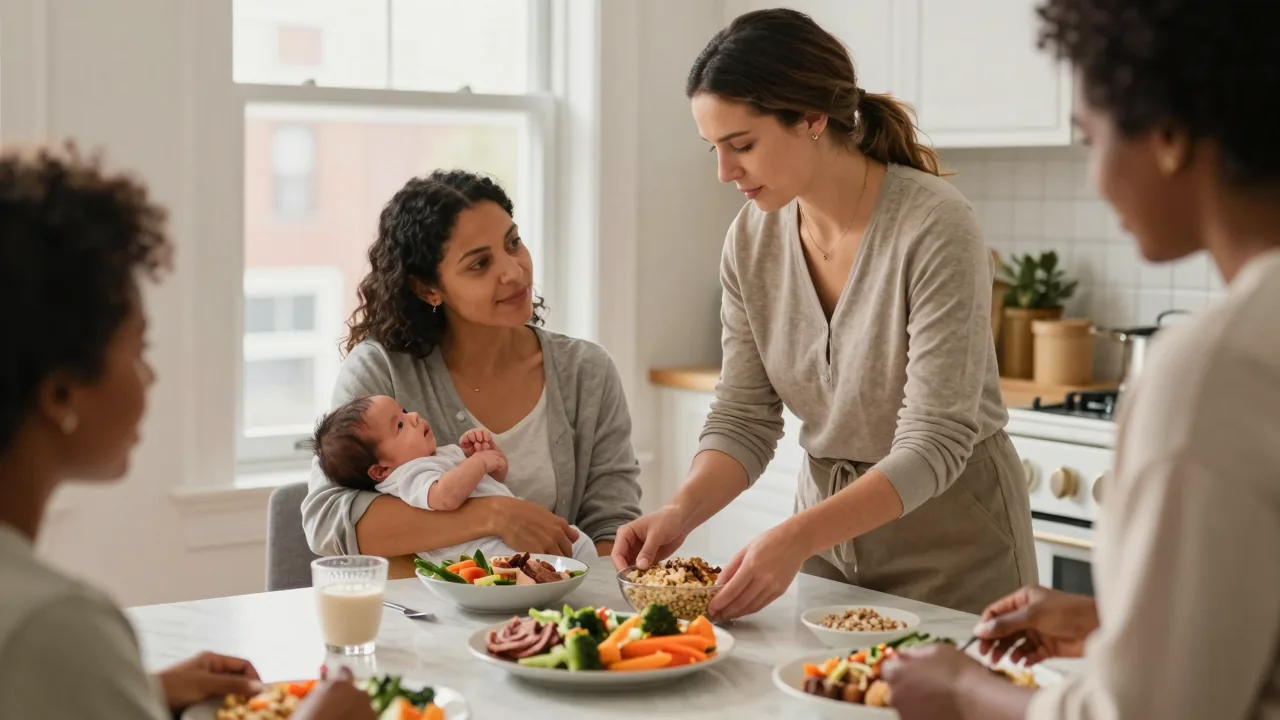
Forget the old myth: Postpartum recovery isn’t just about rest—it’s also about fueling your body right.
New moms in Boston, MA, often underestimate how crucial proper nutrition is for healing and sustaining energy during those exhausting first weeks with a baby. A postpartum meal plan can make all the difference between running on fumes and feeling nourished enough to care for yourself and your little one. As a seasoned doula helping families in Boston, I’ve seen firsthand how simple prep and smart planning can transform this challenging time into one where you’re better equipped to thrive.
Here’s the truth: You don’t need fancy recipes or hours in the kitchen. With a few key strategies, you can ensure nutritious meals are ready when you need them most—because recovery starts on your plate.

Understanding Postpartum Nutrition Needs (2026)
Recovery after childbirth requires a nutrient-rich diet to support physical healing, energy levels, and—if breastfeeding—milk production. As a Boston doula, I’ve seen firsthand how proper nutrition can make a world of difference for new moms navigating postpartum life.
Essential Nutrients for Recovery
Your body needs extra nutrients post-delivery to replenish what was used during pregnancy and birth. Here are key focus areas in 2026:
- Protein: Supports tissue repair and muscle recovery. Opt for lean options like Boston’s fresh seafood, eggs from local farms, or plant-based sources such as lentils.
- Iron-Rich Foods: Helps restore blood volume lost during delivery. Try dark leafy greens (plentiful at Boston Public Market), fortified grains, or lean meats.
- Calcium and Vitamin D: Crucial for bone health, especially if breastfeeding. Enjoy dairy from New England producers or fortified plant-based milks.
- Omega-3s: Found in fatty fish like salmon (available at local seafood markets) or flaxseeds—these support brain health and reduce inflammation.
- Fiber: Aids digestion, which can be sluggish postpartum. Whole grains, fruits, and veggies from Boston’s seasonal harvest are excellent choices.
Hydration and Its Role in Postpartum Health
Staying hydrated is critical for recovery, especially if breastfeeding. The average new mom needs at least 10–12 cups of water daily to support milk supply and overall well-being. Here’s how to stay on track:
- Keep a reusable water bottle nearby (refill stations are common in Boston hospitals).
- Herbal teas or infused waters with local fruits can make hydration more enjoyable.
- Limit caffeine, which can contribute to dehydration—opt for decaf versions of your favorite Boston roasts.
By prioritizing these nutrients and hydration strategies, you’ll fuel your body’s remarkable postpartum recovery process.

How to Plan Postpartum Meals (Boston Doula Tips)
Planning postpartum meals in advance can ease the transition into parenthood, ensuring you have nourishing food ready when time and energy are scarce. As a Boston doula, I recommend starting with a structured yet flexible approach that balances convenience and nutrition.
Creating a Weekly Meal Plan
Begin by outlining a simple weekly meal plan. Focus on dishes that can be prepped ahead or reheated easily. For example, batch-cook soups like New England clam chowder (using local seafood) or hearty stews—both freeze well and provide comfort during recovery. Use tools like the Boston Public Health Commission’s nutrition resources for meal inspiration tailored to postpartum needs.
“Preparing meals in small batches ensures variety while minimizing waste. Freeze portions in labeled containers so you can grab a ready-to-eat option anytime.”
Incorporating Easy-to-Prepare Recipes
Prioritize recipes with minimal ingredients and steps. Overnight oats, sheet-pan roasted vegetables with lean proteins (like local fish or chicken), and slow-cooker meals are great options. Boston’s farm-fresh markets, such as the Copley Square Farmers Market, offer seasonal produce to simplify grocery shopping.
Consider enlisting help from a postpartum meal delivery service like Boston-based Moms Meals or organizing a “meal train” with friends or family. These supports can take pressure off while ensuring you’re eating balanced meals post-birth.
Meal Prep Strategies for New Moms
The postpartum period is demanding, and having a well-planned meal strategy can make all the difference. As a Boston doula, I’ve seen how proper prep eases stress during those early weeks with a newborn.
Freezer-Friendly Meals to Save Time
Prepping freezable meals before your baby arrives is one of the best ways to ensure you have nutritious food on hand without extra effort. These meals are lifesavers when energy is low and time is scarce.
- Lasagna or casseroles: Hearty, easy-to-reheat options that freeze well.
- Soups and stews: Packed with protein and veggies; portion in freezer-safe containers.
- Pre-cooked grains: Rice, quinoa, or farro can be frozen for quick sides.
- Homemade stock: Useful for soups, risottos, or braised dishes.
- Smoothie packs: Pre-cut fruits and veggies in bags for grab-and-go blends.
Batch Cooking for Efficiency
Cooking large portions during your third trimester (or with help from loved ones) means you’ll have ready-to-eat meals stored. Focus on recipes that reheat well and fit into freezer-safe containers.
- Slow-cooker favorites: Boston’s farm-fresh ingredients shine in dishes like pulled chicken or lentil curry.
- Double batches: If making a recipe, cook twice the amount and freeze half.
- Label everything: Use masking tape to note contents and date on storage bags/containers.
- Involve your community: Ask friends or family to sign up for meal drops via apps like MealTrain.
By setting up these systems in advance, you’ll spend less time in the kitchen and more time bonding with your baby.
Postpartum Meal Delivery Services in Boston (2026)
Navigating postpartum recovery with a newborn is challenging enough—adding meal planning to the mix can feel overwhelming. Fortunately, Boston’s 2026 meal delivery services offer convenient solutions for new families. These services provide fresh, nutritious meals tailored to the unique needs of postpartum parents, ensuring you stay nourished without the stress of cooking.
“A well-stocked freezer with pre-made meals can be a game-changer in those early weeks. Look for services that prioritize whole foods and minimize processed ingredients—your body will thank you!” — Boston-based doula and nutrition advocate
Top-Rated Options for Fresh, Healthy Meals
In 2026, several Boston-based meal delivery services stand out for their quality and convenience. Freshly Prepared Meals offers locally sourced, ready-to-eat options with minimal prep required—perfect for days when time is scarce. Boston Organic Kitchen specializes in organic, family-style dishes that can be easily reheated, making them ideal for sharing with partners or visitors. For those who prefer meal kits over pre-cooked meals, Harvest Boston delivers ingredients and recipes designed for quick assembly.
Customizing Meals Based on Dietary Needs
Postpartum recovery often comes with specific nutritional needs, whether due to dietary restrictions, cultural preferences, or medical advice from your healthcare provider. Many local services allow customization for vegan, gluten-free, dairy-free, and low-sodium diets. Mama’s Meal Prep, a Boston favorite, works directly with clients to tailor meal plans that align with their recovery goals, ensuring every bite supports healing and energy levels.
Whether you opt for full meal delivery or partial kits, these services can help you focus on what matters most—bonding with your baby.
Involving Family and Friends in Meal Planning
The postpartum period is a time when support from loved ones can make all the difference. Involving family and friends in meal planning ensures you have nutritious, ready-to-eat meals without the stress of cooking. Here’s how to organize practical help while keeping things manageable for everyone.
Setting Up a Postpartum Meal Train
A meal train is a simple way to coordinate food deliveries from friends and family. Start by creating a sign-up sheet or using an online tool like Take Them a Meal or MealTrain. Share the link with your network, specifying dates, dietary preferences (especially important in Boston’s diverse culinary scene), and any allergies. Here are five key tips for success:
- Set clear guidelines: Note whether meals should be ready-to-eat, freezer-friendly, or require reheating.
- Include pickup/delivery options: Many local Boston restaurants offer prepared meals that can be dropped off at your home.
- Assign specific dates: Avoid overlap by scheduling meals in advance.
- Share storage instructions: Let contributors know if you have space constraints (common in small Boston apartments).
- Offer gratitude: A quick thank-you note or text goes a long way in keeping morale high.
Delegating Tasks to Lighten the Load
Don’t hesitate to assign specific tasks to family members who want to help. For example, one person could handle grocery shopping while another takes charge of cooking. If you’re part of a local parenting group (like those on Facebook or Meetup), consider swapping meals with other new moms for variety and community support.
Keep communication open and flexible—needs change quickly in the early weeks postpartum. By involving your network thoughtfully, you’ll ensure consistent access to nourishing meals while preserving precious energy for bonding with your baby.
Take Care of Yourself With Smart Postpartum Meal Planning
Postpartum meal planning doesn’t have to be overwhelming. Focus on easy-to-prepare, nutrient-rich foods that support your recovery and energy levels. Stock your freezer with ready-made meals from trusted sources like Boston-area meal delivery services or friends and family. Stay hydrated, eat balanced meals, and prioritize iron-rich and protein-packed options—your body needs them to heal.
Nourishing yourself is just as important as caring for your baby. Whether you’re cooking in advance, relying on community support, or ordering from local providers, make postpartum nutrition a priority. You’ve got this, Mama!